Image of Örebro

A guide to
ÖREBRO

Welcome to Örebro

#sweden 🇸🇪 #europe

Table Of Contents

Where to go

🔗

1. Svampen

🔗
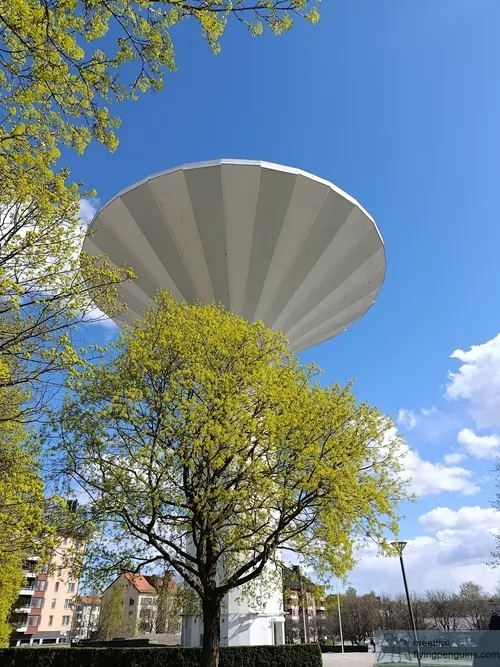
Standing in the city of Örebro is one of its most recognizable landmarks: Svampen, literally "The Mushroom". Built in the 1950s by architect Sune Lindström and completed in 1958, this 58-meter-tall water tower replaced the city's older water towers and has since become the symbol of Örebro.
From a distance, Svampen looks deceptively small; almost like a little tower you'd barely notice. But as you get closer, the scale of it hits you. Standing right underneath it, you feel tiny, like an ant at the feet of a giant. It's one of those structures that tricks your perception until you're right there.
Now, despite its name meaning "mushroom", I have to be honest: to me it looked more like a spinning top, or trompo. The round, wide top sitting on a narrow stem gives it that unmistakable silhouette, whatever shape you see in it.
What makes Svampen truly special is the view from the top. The tower is accessible by elevator, and at 58 meters up you're treated to a 360-degree panoramic view of the entire city. And because Örebro sits on the flat Närke Plain, there's nothing blocking your sight; you can see everything stretching out in every direction. On a clear day, it's quite impressive.
📍 Directions

2. Örebro Castle

🔗
Örebro Castle
Right in the heart of the city, on a small island in the Svartån River, stands Örebro Castle: a massive, impossible-to-miss fortress that has been watching over this place for over 700 years. It's one of those landmarks that defines a city. You see it from across the river, you walk past it, you cross it; it's always there.
The castle dates back to the 14th century, and its history reads like a highlight reel of Swedish history. It started as a medieval fortress, was attacked and besieged nine times, served as a royal residence for the Vasa dynasty, and even hosted the 1810 Riksdag where French Marshal Jean Baptiste Bernadotte was chosen as heir to the Swedish throne, who would become King Karl XIV Johan. Today, the governor of Örebro County still lives in one of its towers, making it one of Sweden's few functioning administrative castles.
The castle is open year-round with exhibitions, guided tours (included with your ticket), a children's tower, and even ghost tours during fall break. If you're into history, the 40-minute guided tour on Saturdays and Sundays is well worth it.
Now, here's a fun one: in Henry Allards park stands Banc Public. It's a classic green park bench that's nearly three times the size of a normal bench. Created by French artist Lilian Bourgeat and installed as part of OpenArt 2015, it faces the castle with a playful twist. From far away, it looks like a regular bench. But as you walk closer, you realize just how massive it is; an optical illusion. Of course, you're meant to sit on it, which makes the whole thing even funnier.
And if you time it right, the castle makes for beautiful photos at sunset. The river reflects the golden light, the stone facade warms up, and there's something almost fairy-tale about the whole scene. Grab a spot on one of the benches along the riverbank and just watch.
🌐 Örebro Castle Official Website
📍 Directions

3. Wadköping

🔗
Wadköping old town in Örebro
Just a short walk from the castle, along the river Svartån through Stadsparken, you'll find Wadköping: an open-air museum that feels like stepping into a different century. Old wooden houses, cobblestone streets, and red farmsteads line the alleys, all carefully moved here from central Örebro and pieced back together. It opened in 1965, inaugurated by King Gustav VI Adolf himself, and today it's one of the city's most beloved corners.
The name "Wadköping" comes from the author Hjalmar Bergman, who was born and raised in Örebro in the late 19th century. He used it as the fictional name for his hometown in several novels, most notably Markurells i Wadköping (1919). You can visit the Hjalmar Bergman Museum here and learn about his life: Hollywood dreams, jealousy, café life in Berlin, love, fear, and fantastic literature. His profile greets you at the entrance, a tribute to the man who gave this place its name.
The oldest buildings are worth noting: Kungsstugan dates from the 15th or 16th century, and Cajsa Warg's house from the 17th century. Cajsa Warg was born in Örebro and became one of Sweden's most famous cooks, publishing a cookbook in 1755 that's been called Sweden's first real cookbook. You can visit her pantry inside her childhood home. And in these old buildings, the ceilings and doorframes can be surprisingly low, so watch your head if you're tall.
Today, Wadköping is far from a static museum. The streets are alive with artisan workshops: silversmiths, woodturners, blacksmiths, and seamstresses all work and sell their creations here. There's a delicatessen (The House of Taste) where you can sample and buy sauces, oils, and spreads in all kinds of flavors like chocolate, orange, and more. A bakery right by the entrance, a café, and a restaurant serving traditional Swedish food. If you're looking for souvenirs or handmade jewelry, this is the place.
For families, there's a playground and old-fashioned play areas where kids can explore. The outdoor theater stage hosts performances throughout the year, and depending on when you visit, you might stumble upon something unexpected. When we were there, a large group of people was knitting in the theater area, with kiosks selling their handmade wool products, gloves, and yarn balls.
Wadköping hosts markets year-round too: Easter markets, antique and curio markets in spring, food and craft markets in August, and Christmas markets every Sunday during Advent when the whole neighborhood transforms with traditional stalls, aromas, and flavors.
📍 Directions

Recommendations

🔗

1. Örebro Saluhall: every flavor under one roof

If you're travelling in a group, you know how it goes: some want pizza, others want sushi, someone's craving a steak, and there's always the brave one who goes for seafood. Normally that means debating for half an hour and settling for something. But at Örebro Saluhall, that doesn't happen. Everyone eats what they feel like, but you all share the same table.
It's a food hall located in Viktoriahuset, right in the city center (Kungsgatan 15), where nine restaurants and bars coexist under one roof. The concept is simple but brilliant: you order from wherever you want, whether that's Italian at Bella Italia, Asian street food at Zao Street Kitchen, sushi at Street Sushi, grilled meats at Carne, or fresh seafood at Fisk i Hallen, and you sit wherever you like. There's a shared space on the ground floor with a great vibe, good music, and an atmosphere that makes you want to stick around. There's also an upper floor with more seating for when the downstairs gets full.
And if you're in the mood for drinks, Saluhallsbaren serves local craft beers and cocktails, perfect for an afterwork. There's also Chilango, a cocktail bar with Latin American flair, and Brus, a wine bar ideal for sharing a glass with some nibbles. Honestly, there's something for everyone, literally. 📍 Directions
🐧
Opening hours

Monday: 11:00 - 19:00
Tuesday: 11:00 - 19:00
Wednesday: 11:00 - 21:00
Thursday: 11:00 - 21:00
Friday: 11:00 - 22:00
Saturday: 11:00 - 22:00
Sunday: Closed
Hours may vary slightly between restaurants. On Fridays and Saturdays some places stay open later.

Climate

🔗
Jan
-5.0°
0.7°
Feb
-4.9°
1.4°
Mar
-2.7°
5.8°
Apr
1.0°
12.2°
May
5.7°
17.4°
Jun
9.9°
21.4°
Jul
12.3°
23.5°
Aug
11.2°
22.0°
Sep
7.7°
17.4°
Oct
3.3°
10.7°
Nov
0.2°
5.6°
Dec
-2.9°
2.5°